

Beginner’s Guide to Affiliate Marketing: The Ultimate Explainer Story of Affiliate Marketing 2026
Are you tired of living paycheck to paycheck and dreaming of financial freedom? Do you want to earn money while you sleep and travel the world? If so, you’re not alone. Affiliate marketing is a rapidly growing industry that has already created millionaires and can do the same for you.
The Affiliate Marketing Market: By the Numbers
The affiliate marketing market is expected to reach $12.1 billion by 2026, up from $6.8 billion in 2020, according to a report by ResearchAndMarkets. This represents a compound annual growth rate (CAGR) of 14.1% during the forecast period.
By 2030, the affiliate marketing market is expected to reach $24.1 billion, up from $12.1 billion in 2026, according to a report by Grand View Research. This represents a CAGR of 15.6% during the forecast period.
What is Affiliate Marketing?
Affiliate marketing is a form of performance-based marketing where an affiliate (you) promotes a product or service from a merchant (the product creator) to potential customers. When a customer clicks on your affiliate link and makes a purchase, you earn a commission on the sale.
How Affiliate Marketing Works
Here’s a step-by-step explanation of the affiliate marketing process:
- You choose a product to promote: You browse the network’s marketplace and choose a product that aligns with your niche and audience.
- You get your affiliate link: The network provides you with a unique affiliate link to track your referrals.
- Someone clicks on your link: A potential customer clicks on your affiliate link and is taken to the merchant’s website.
- They make a purchase: The customer makes a purchase and you earn a commission on the sale.
Benefits of Affiliate Marketing
So, why should you consider affiliate marketing? Here are just a few benefits:
- Passive income potential: With affiliate marketing, you can earn money while you sleep, travel, or focus on other projects.
- Low startup costs: Starting an affiliate marketing business requires little to no upfront costs.
- Flexibility and scalability: You can promote products from anywhere with an internet connection and scale your business as big as you want.
Choosing the Right Affiliate Program
Not all affiliate programs are created equal. Here are some things to look for when choosing a program:
- Reputation: Research the merchant and their product to ensure they have a good reputation.
Creating Valuable Content
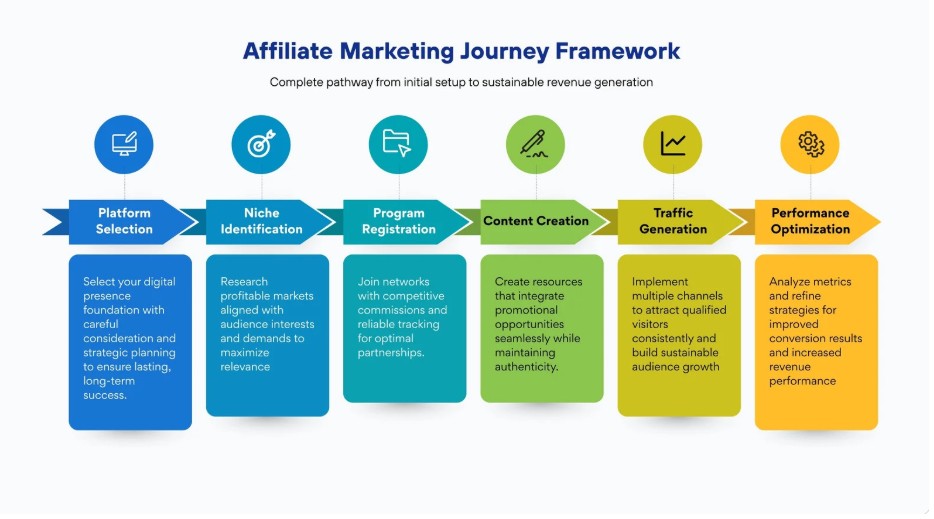
Creating valuable content is key to success in affiliate marketing. Here are some tips:
- Know your audience: Understand who your ideal customer is and what problems they’re trying to solve.
- Choose the right format: Use the content format that resonates best with your audience, such as blog posts, videos, or podcasts.
- Optimize for SEO: Use keywords strategically throughout your content to improve your search engine rankings.
Building an Audience
Building an audience takes time and effort, but it’s worth it. Here are some ways to get started:
- Build an email list: Use opt-in forms on your website to collect email addresses from potential customers.
- Collaborate with other affiliates: Partner with other affiliates in your niche to reach a wider audience.
Tracking and Optimizing
Tracking and optimizing your affiliate marketing campaigns is crucial to success. Here are some tools to help you get started:
- Affiliate link tracker: Use a tool like Affiliate Link Tracker to track your affiliate links and commissions.
- Analytics software: Use a tool like Google Analytics to track your website traffic and conversion rates.
- Split testing software: Use a tool like OptimizePress to split test different versions of your content and landing pages.
Conclusion
Affiliate marketing is a legitimate way to earn money online, but it takes work and dedication. By following the steps outlined in this guide, you can start building a successful affiliate marketing business that generates passive income and sets you up for financial freedom.
Get Started Today
So, what are you waiting for? Sign up for an affiliate program today and start building your online empire.
Affiliate Link Disclosure
Some of the links in this article are affiliate links, which means that at no extra cost to you, I may earn a commission if you click through and make a purchase. Please keep in mind that I only recommend products and services that I believe will add value to your business and help you achieve your goals.
Call to Action
Ready to start your affiliate marketing journey? Click the link below to sign up for ShareASale and get access to thousands of products to promote.
Insert CTA button: Get Started with ShareASale
Affiliate marketing—the term might sound complex, but at its heart, it is one of the oldest, most effective forms of commerce: word-of-mouth referral, upgraded for the internet age. This performance-based marketing strategy rewards individuals or businesses (affiliates) for driving sales, leads, or traffic to a seller’s product.
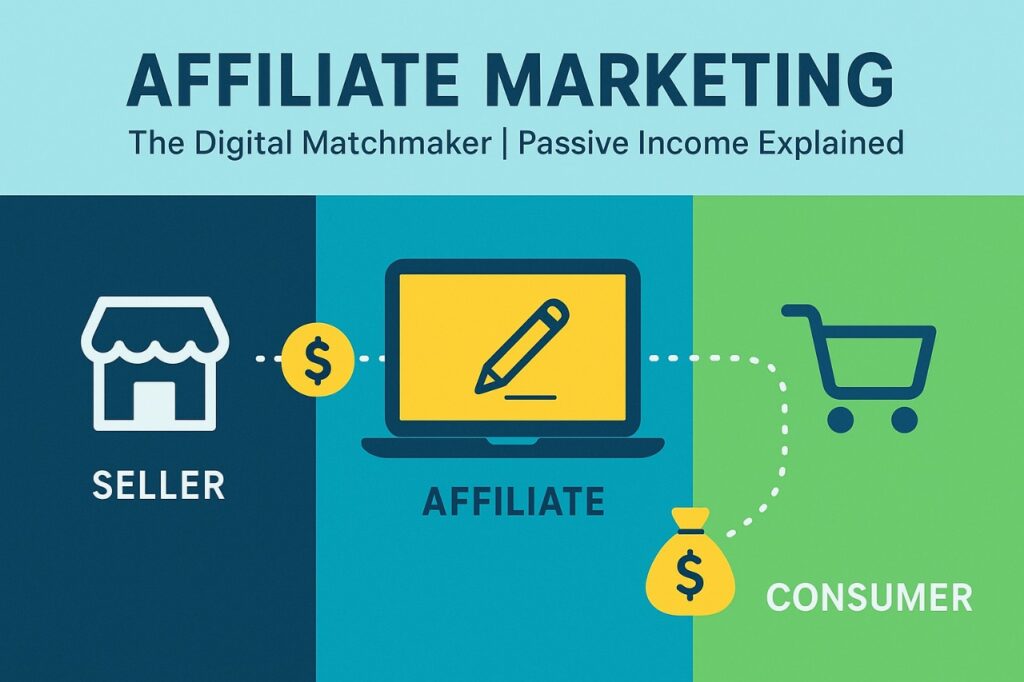
This comprehensive guide will define affiliate marketing, explain the process using a relatable story, detail high-value programs, and show you exactly how to start earning passive income online.
- The Core of Affiliate Marketing: The Story of Maya and The Perfect Blender.
- The Affiliate’s Toolkit: Content and Traffic Sources
- Key Traffic Sources for Affiliate Links
- Maximizing Income: High-Commission Affiliate Programs
- The Technical Backbone: Affiliate Links and Cookies
- The Key to Success: Trust and Ethical Guidelines
- Advanced Strategies: Scaling Your Affiliate Empire
- Conclusion: Start Your Journey in Affiliate Marketing
The Core of Affiliate Marketing: The Story of Maya and The Perfect Blender.
Affiliate marketing continues to be one of the most effective ways to build a sustainable online income. It allows individuals, bloggers, influencers, and content creators to earn commissions by promoting products or services from various brands around the world.
The potential of affiliate marketing is substantiated by its proven ability to generate high returns on investment and its sustained market growth. The global affiliate marketing industry is valued at over $18.5 billion and is projected to surpass $31 billion by 2031, underscoring its long-term viability as a core digital strategy. For advertisers, this performance-based model is exceptionally efficient, with businesses often reporting an average return of $12 to $15 in revenue for every $1 spent on affiliate payouts. This high ROI, coupled with the fact that over 80% of brands utilize affiliate programs, solidifies its position as a dominant, scalable, and trusted channel for customer acquisition in the modern e-commerce landscape (Cognitive Market Research, 2024).
To truly understand this concept, let’s look at the three main players in every successful affiliate marketing relationship: the Seller, the Affiliate, and the Consumer.
The Scene: Maya, the Passionate Food Blogger
Meet Maya, a passionate home cook and food blogger. Her blog, “Kitchen Whiz,” has a loyal following of people who trust her recipes, tips, and product reviews.
Part 1: The Merchant and the Opportunity
The “Merchant” (or Seller) is “BlendMaster Pro,” a company that sells high-end blenders. They have a fantastic product but need a wider reach. To solve this, BlendMaster Pro creates an Affiliate Program, offering a 10% commission on every blender sold through a special referral link. They only pay when a sale is confirmed, making this a low-risk marketing investment.
Part 2: The Affiliate and the Value Creation
Maya (the Affiliate) buys and genuinely loves the BlendMaster Pro. She decides to write a detailed, honest review titled, “The Only Blender You’ll Ever Need: My BlendMaster Pro Review.”
- She Joins the Program: Maya signs up and receives a unique tracking link. This link is essential for tracking where the sales come from.
- She Creates Trust: Her review provides genuine value, sharing photos and a video, building confidence in the product.
- She Includes the Link: She uses a clear call-to-action: “If you’re ready to upgrade your smoothie game, you can purchase the BlendMaster Pro here” [then places her Affiliate Link].
Part 3: The Consumer and the Conversion
Alex, a reader (the Consumer), is looking for a new blender but is paralyzed by too many choices. He trusts Maya’s recommendation.
- The Click: Alex clicks Maya’s special affiliate link.
Part 4: The Commission (The Pay-Off)
- BlendMaster Pro gets a $300 sale.
- Maya earns her 10% commission, or $30.
Maya has successfully acted as a digital referral agent, earning money by connecting a product with a buyer. This is the simple, powerful formula that drives the entire affiliate marketing industry.
The Affiliate’s Toolkit: Content and Traffic Sources
An affiliate’s success is directly proportional to their ability to drive qualified traffic to the merchant’s offer. This is where strategic content creation and traffic diversification come into play.
High-Converting Content Types
Affiliates use various content formats to attract, inform, and persuade their audience.3 For a blogger like Maya, the primary focus would be on:
- Product Reviews and Testimonials: These are high-intent content pieces, like Maya’s blender review. They address specific problems and compare the product favorably against competitors.
- Tutorials and How-To Guides: Showing users exactly how to use a product (e.g., “How to Start a WordPress Blog in 10 Minutes using Bluehost”). This positions the affiliate as an expert and naturally integrates the affiliate link as a solution.
- Comparison Posts: Articles like “BlendMaster Pro vs. VitaMix: Which is Best?” capture traffic from customers who are in the final stages of the buying cycle and just need a final push to decide.
- Resource Pages: A dedicated page listing all recommended tools and services (e.g., “Maya’s Essential Kitchen Tools”). This provides a centralized location for affiliates to monetize general traffic.
Key Traffic Sources for Affiliate Links
The traffic source determines the quality and volume of potential buyers.
- Blogging (SEO): This is the foundation of passive income. By optimizing articles for Search Engine Optimization (SEO), Maya captures free, organic traffic from users actively searching for solutions (like “best high-speed blender”). This traffic converts highly because the intent is strong.
- Email Marketing: This is considered the most valuable source. By collecting emails, Maya owns her traffic. She can promote high-commission or time-sensitive offers directly to an audience that has already demonstrated trust in her.
- YouTube: Video reviews and tutorials have high trust and conversion rates. A successful video can continue to drive sales for years, similar to a high-ranking blog post.
Maximizing Income: High-Commission Affiliate Programs
While physical products like blenders are great for beginners, a key strategy for maximizing profit is targeting high-ticket or recurring commission programs, often found in the Software as a Service (SaaS) and Web Hosting niches.
High-Value Programs and Payout Structures
| Program Example | Niche & Commission Type | Commission Details | Cookie Duration |
| Kinsta | Managed Web Hosting (Recurring) | Up to $500 one-time bonus + 10% recurring lifetime commission. | 60 days |
| HubSpot | CRM/Marketing Software (Recurring) | 30% recurring commission for up to one full year. | 180 days |
| Legendary Marketer | Digital Education (High-Ticket) | 30% to 60% commission rate on high-ticket coaching programs. | 90 days |
| Bluehost | Beginner Web Hosting (Flat Rate) | Flat rate $65+ per qualified sign-up (negotiable for volume). | 30 days |
Understanding the Importance of Recurring Revenue
A recurring commission, such as the 10% lifetime commission from Kinsta, is the ultimate goal of affiliate income generation.5 If Maya were to refer a new customer to a software platform with a $100 monthly fee, she would earn $10 every single month that customer stays subscribed. This creates a highly stable, passive income stream from a single piece of work.
- Requirements: Merchants typically require an active online presence that is topically relevant to their product (e.g., promoting Bluehost on a “how to start a blog” guide).
The Technical Backbone: Affiliate Links and Cookies
The entire operation relies on accurate technical attribution, which is the system’s ability to credit the right publisher (affiliate) for the sale.
The Role of the Tracking Cookie
When a user clicks an affiliate link, a tracking cookie is dropped onto their web browser. This small file does two main things:
- Identifies the Affiliate: It stores a unique ID linked to the person who sent the traffic (Maya).
Sets the Expiration Date: The cookie has a lifespan (e.g., 60 days, as seen with Kinsta). If the customer returns and makes a purchase within that window, the affiliate still gets the commission. This rewards affiliates even if the customer takes time to decide.
Payout Models
Affiliates are paid based on defined performance goals:
- Pay Per Sale (PPS): The most common model. The affiliate earns a percentage of the final sale price (e.g., 10% on the blender).
- Pay Per Lead (PPL): The affiliate earns money for a specific action, such as a customer filling out a contact form or starting a free trial (common in SaaS).6
- Pay Per Click (PPC): Extremely rare in modern affiliate marketing, this model pays the affiliate simply for driving traffic to the merchant’s website.
The Key to Success: Trust and Ethical Guidelines
The greatest asset an affiliate possesses is audience trust. The most profitable affiliates adhere to the Involved Affiliate Marketing model—they only promote products they genuinely use and endorse.
Legal and Ethical Disclosure Requirements
Transparency is mandatory for maintaining credibility and complying with legal bodies like the Federal Trade Commission (FTC) in the U.S. and similar consumer protection agencies globally.
- Clear Disclosure: Affiliates must clearly state that they receive compensation for their recommendations. This disclosure should be placed before the affiliate link itself.
- Honesty: The affiliate must not make false or misleading claims about the product just to secure a sale. The recommendation must reflect their honest opinion and experience.
The Cost of Poor Ethics
If Maya were to promote a faulty product just for a quick commission, she would erode the trust of her audience (Alex and others). Trust takes years to build and seconds to destroy. A failed recommendation leads to fewer clicks, lower conversions, and ultimately, a failing business model. Affiliate marketing thrives on authenticity.
Advanced Strategies: Scaling Your Affiliate Empire
Once an affiliate masters content creation, the next step is scaling their efforts beyond a single blog or platform.
- Diversify Traffic: Instead of relying solely on Google SEO, Maya might start a YouTube channel dedicated to kitchen equipment reviews, leveraging her existing blog content in a new format.
- Build the Funnel: For high-ticket items (like the HubSpot software), the sales journey is long. Maya would build an email funnel offering a free guide (e.g., “The Ultimate Marketing Checklist”) in exchange for an email address. She then nurtures that lead over several weeks, educating them until they are ready to purchase the software.
- Avoid Link Spam: Successful affiliates integrate links naturally into helpful content. They avoid overwhelming the user with links, as this degrades the reading experience and looks unprofessional.
Conclusion: Start Your Journey in Affiliate Marketing
Affiliate marketing is a scalable, low-cost way to generate passive income online.7 By focusing on providing high-quality content, building trust with your audience, and strategically choosing programs that offer recurring or high-value commissions, you can build a successful digital business today. The blend of trusted recommendation, technological tracking, and performance-based payouts makes it one of the most exciting and accessible forms of online entrepreneurship.
Ready to find your perfect niche? You’ve mastered the basics—now, see exactly where the money is made. Click here to read our related deep-dive: “The 5 Most Profitable Affiliate Niches Right Now“ and start targeting high-value programs today!
Prefer weekly shortcuts to success? Join our inner circle and get free, high-value affiliate tips sent directly to your inbox. Sign up for the newsletter here!
